Posts tagged choosing
Choosing the Right CNC Machine
1
Competition in the manufacturing arena has been fierce over the past few decades. With an almost 10 fold decline in manufacturing companies in the USA over several industries in the past decade has made choosing the right production tools a necessity to keep your business viable. The key to most manufacturing facilities are the CNC software and hardware capabilities chosen for a particular manufacturing process. Efficiency, machine and tool life span, versatility, ease of setup and piece throughput are some of the key areas that affect a manufacturer.
Optimal CNC machines offer manufacturers a flexible system that can be easily programmed to handle parts on equipment from simple three-axis mills to much more elaborate multi-axis machine tools.
Make sure you know what type of results you are after. Machines such as CNC engraving, routing and milling have improved tremendously with extensive CAD software and specialty CNC machines. Often there are too many choices, so knowing what you want to accomplish will help narrow down which type of service and machine you are after.
Here is a list of various machines and machine types to choose from found at Superior Machinery:
- Air Compressors
- Balancers
- Bar Feeders
- Benders
- Boring Mills
- Broaches
- Chillers
- Chip Wringers
- CMM
- CNC Horizontals
- CNC Lathes
- CNC Verticals
- Coil Processing
- Drills
- Dust Collectors
- EDM
- Engine Lathes
- Fabrication
- Flame Cutters
- Gear
- Grinders
- Hones
- Inspection
- Lasers
- Material Handling
- Mills
- Other
- Plastics
- Press Brakes
- Presses
- Punches
- Robots
- Routers
- Saws
- Screw Machines
- Shears
- Swiss Lathes
- Tooling
- Tube Machinery
- Vertical Turret Lathes
- Washing Equipment
- Waterjets
- Welders
- Wire Forming
Compound machines beget high-speed and high-precision machining, which has been gaining momentum among users of the high-end CNC machines. Trying to figure out how to get more out of the same machine, or buy one machine that can do the work of what two machines did in the past. This is a trend in the industry. Compound machines are becoming more common, for example, where you have a mill side and a lathe side and you’ve got multiple part programs running.
Software and CNC training enhancements help manufacturers operate at higher efficiencies.
Ease and efficiencies in programming are keys to improving plant productivity. The latest trends are for extremely functional conversational programming and very complex high-speed machining applications. Operators and machine shops need all the help they can get to remain competitive. Whether you’re making a small batch of parts or millions, you need to maximize the capability of the system and consistently bring parts to QC that can be shipped and accepted. Many dealers in CNC systems are not taking the time to fully learn the nuances of each system and its capability, so the control practically has to be self-explanatory and extremely powerful.
For high-speed machining, the system must stage [buffer] all the servo activity so the relation between the cutter and material does not change. At speeds in excess of 3000 ipm [76 m/min], the control and servos have to be mated perfectly to make this happen.
Not sure what your needs are? You can email us for help and we’ll do our best to locate the correct machine for your needs.
Choosing a CNC Cutting Machine
1To choose the most suitable CNC cutting machine, you need to consider following factors: cutting breadth, structure, cutting mode, and torch height adjusting mode.
Cutting Breadth refers to the effective cutting width and length.
For example, the portable type, when you put our machine onto the plate, you should consider two aspects: (1) size of work piece, you should make sure the machine can cut it one time. (2) width of plate; when the machine is put onto the plate, its effective cutting width should be as long as the plate width, in order to reduce frequent movement of the portable cutting machine.
For other machine types, it is generally the same: cutting breadth of the machine depends on specifications of the plate you want to cut. You should make sure the machine can cut the work piece in one pass; otherwise, it is usually very inconvenient to move the machine time and time again. To increase efficiency, you can put two pieces of plate breadth wise or length ways at the same time.
Structure: for example using a portable, cantilever, gantry & table type, it is easy to move and install, saves space, low cost, but the effective cutting width is limited. The Gantry type, good rigidity, cutting width can be from 3 to 10m, but needs high installation accuracy requirements and special plant area. The table type is an integral structure, with quick and accurate emplacement, but cutting breadth is limited.
Cutting mode: cutting mode can be classified from different aspects:
- Flame cutting, plasma cutting, both flame & plasma cutting
- Flame cutting: Traditional cutting mode, suitable for cutting low-medium carbon steel plate with perfect cutting quality.
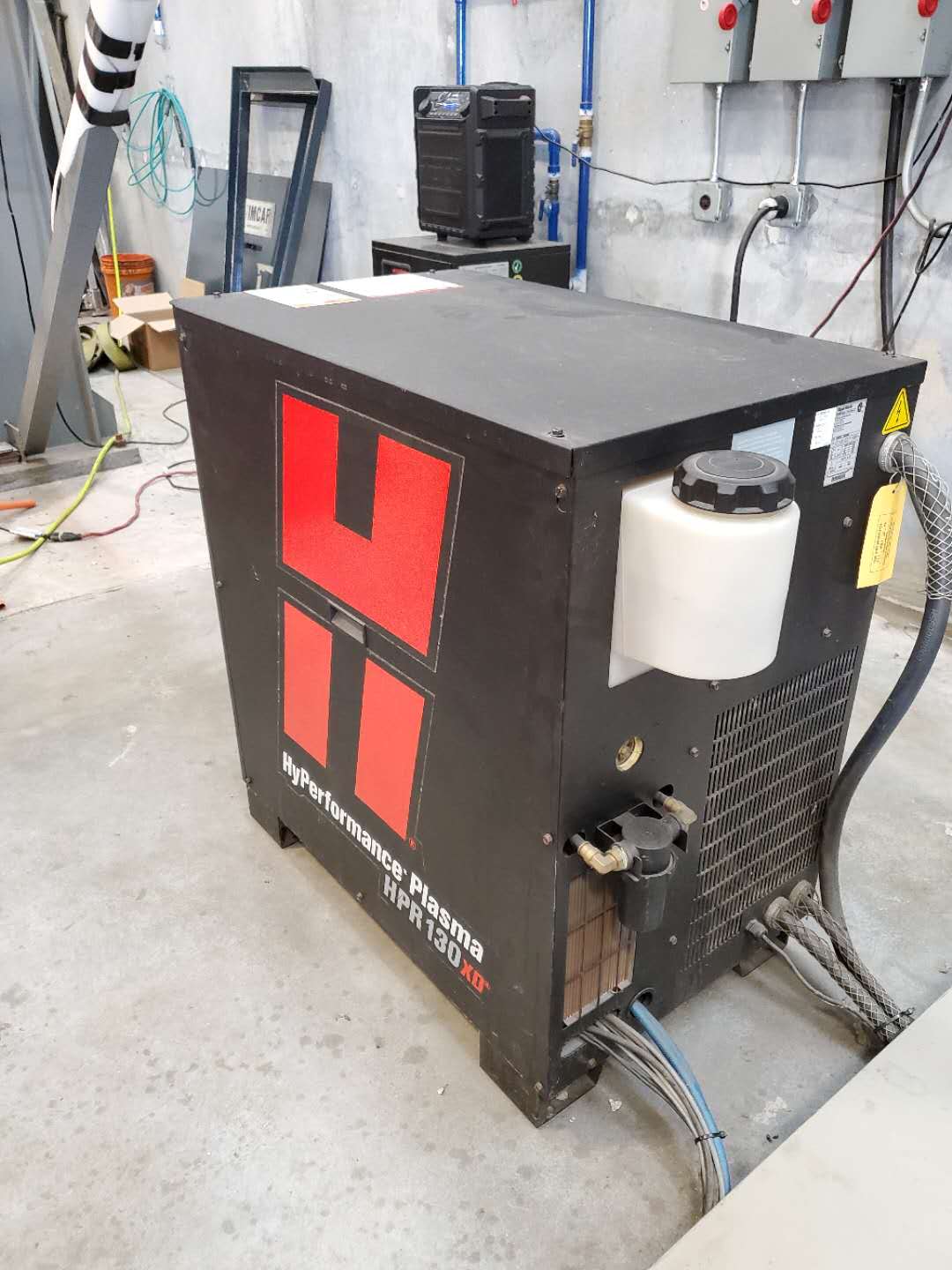
- Plasma cutting is suitable for cutting thin carbon steel, stainless steel, and nonferrous metal plate. Thus its cutting speed is faster than flame cutting.
- Dry-type plasma cutting, under water plasma cutting
- CNC & Strip cutting machine (Linear cutting machine)
- CNC Intersection cutting machine (Pipe cutting machine)
- To cut pipes, we have two methods: One is using a CNC Intersection cutting machine; the other is using an Intersection cutting unit, which can be configured onto a Gantry structure CNC cutting machine.
Torch height adjusting mode: no matter if you’re using flame or plasma cutting, you should make sure that the distance between the torch and plate is adjusted properly to get best cutting quality and prolonged life of the cutting nozzle.
Various methods for adjusting the torch height:
- Manual adjusting
- Hand wheel through gear to drive rack of the torch to adjust torch height.
- Electric adjusting
- Press button, by adjusting motor to drive torch up and down. Above mode needs operator to adjust the torch height.
- Capacitive height controller for flame cutting
- On one hand, this device can automatically adjust torch height, to keep torch at a constant height; On the other hand, after preheat, when we open high-pressure cutting oxygen, there will be Slag spatter. Thus it is easy to jam cutting nozzle. With this device, before we open high-pressure cutting oxygen, the torch will be mounted in advance. After Slag spatter, torch will descend itself, thus to avoid muzzle jam.
- Arc voltage height controller for plasma cutting
- On one hand, plasma cutting speed is very fast.